
← Espace de réflexion
- Astrology & Symbolic Perspectives
- 08/10/2026
New Moon in Libra October 2026
10th of October 2026
When Two Individuals Meet

- Nathalie Auvolat
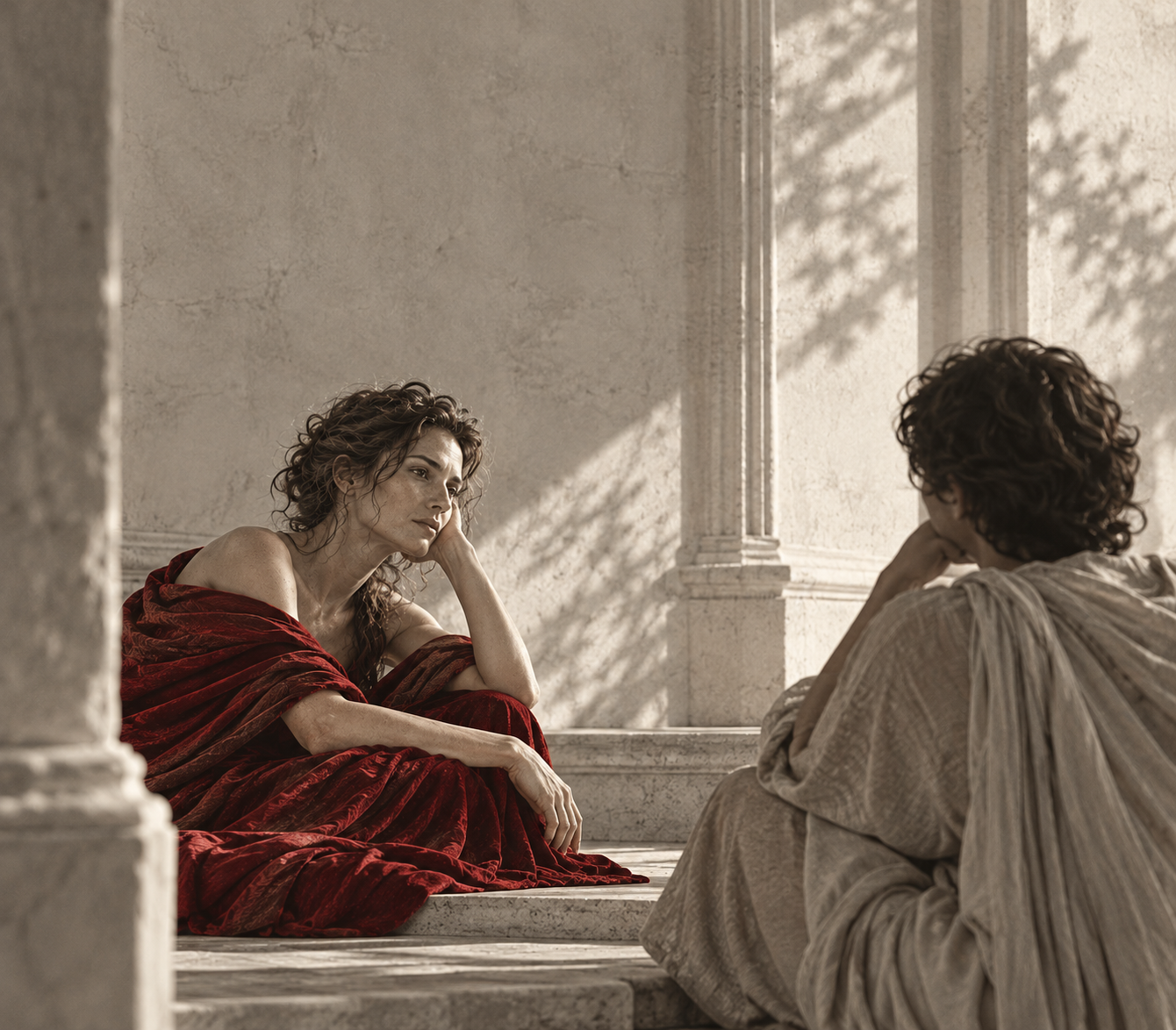
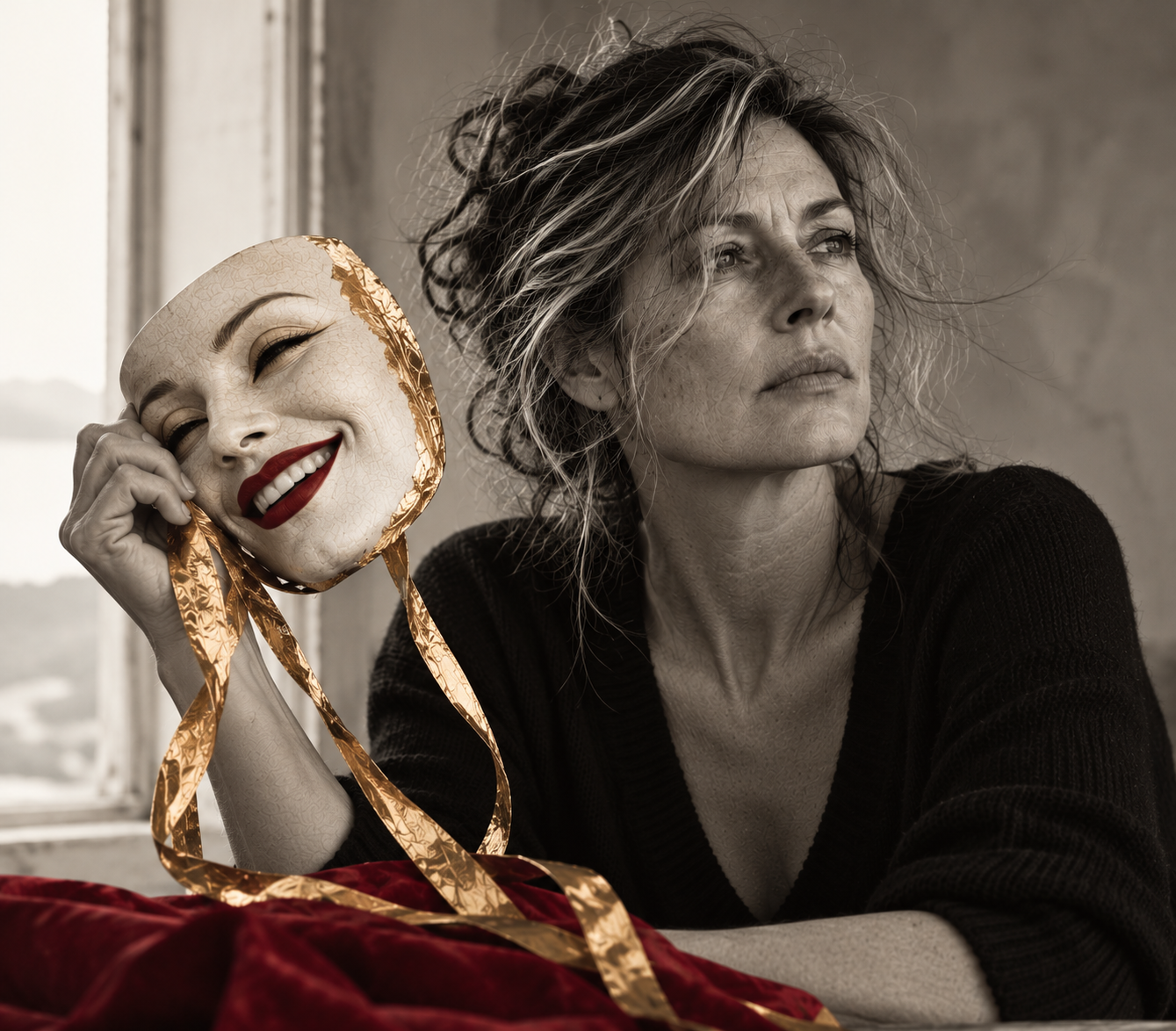
We are not quite the same person with everyone we meet. Some relationships allow us to express aspects of ourselves we had barely recognised, while others lead us, sometimes almost imperceptibly, to change our behaviour, leave certain thoughts unspoken or set our own needs aside.
This ability to adapt is part of what makes a relationship possible. It allows us to welcome difference, make room for another person and create something together. But where is the boundary between the adjustments that every relationship requires and the gradual surrender of what makes us who we are?
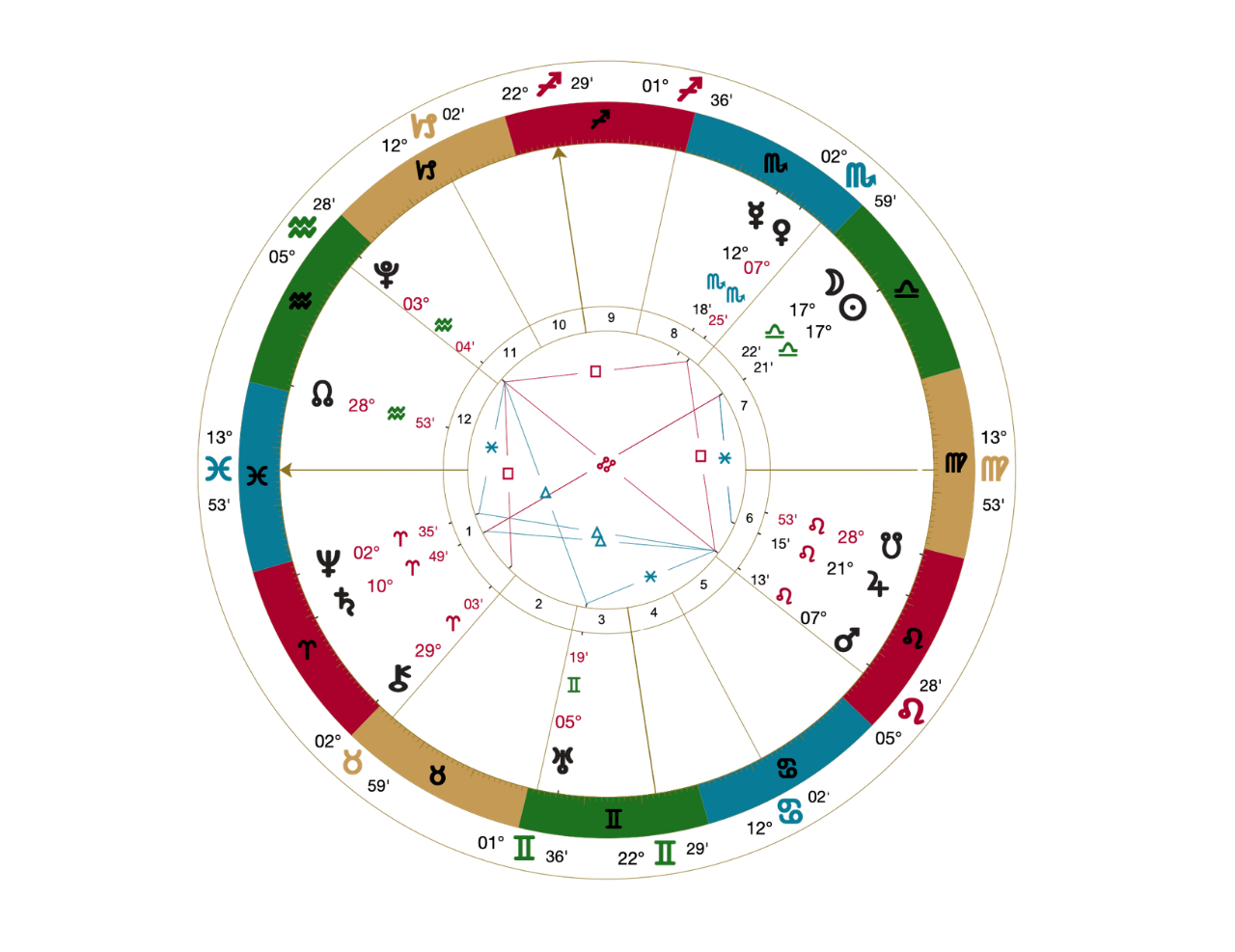
The New Moon in Libra on 10 October 2026 offers a symbolic opportunity to explore this question. Associated with relationships, reciprocity and the search for balance, Libra reminds us that our identity does not develop in isolation. It is discovered, challenged and sometimes transformed through our encounters with others.
Yet recognising another person’s individuality does not mean relinquishing our own. Perhaps the difficulty lies in remaining ourselves while accepting that the other person exists independently of our expectations.
It is precisely this tension between staying true to ourselves and remaining open to otherness that runs through the astrology of this lunation.
I. Venus Retrograde in Scorpio — Exploring Our Attachments
What truly draws us to another person? Is it who they are, what we share with them, or what their presence awakens within us? Beneath the apparent simplicity of certain bonds lie expectations, needs and fears of which we may not be fully aware.
In astrology, Venus symbolises, among other things, how we love, relate to others and assign value to the world around us. In Scorpio, she takes us beyond appearances and into the more intimate dimensions of attachment: the desire for closeness, the fear of loss, the need for emotional security and the difficulty of accepting what lies beyond our control.
Her retrograde motion invites us to turn our attention inward. Rather than immediately seeking explanations in another person’s behaviour, we can begin to question what we project onto them. What do we expect from their presence? What qualities do we attribute to them because they answer a need of our own? And to what extent does our personal history shape the way we interpret their actions, words or silences?
This exploration may reveal contradictions. We may long for a deep connection while fearing the vulnerability it requires, seek freedom while needing reassurance, or interpret a difference in behaviour as a lack of love when it may simply reflect another way of relating.
The intention is neither to distrust every feeling nor to regard our emotional needs as weaknesses. We all need connection, recognition and security. But acknowledging these needs can help us distinguish what genuinely belongs to the relationship from what our own history leads us to seek within it.
Venus retrograde in Scorpio therefore offers a symbolic opportunity to examine our attachments with greater clarity. Not to distance ourselves from what we feel, but to recognise that another person cannot be reduced to the role they occupy in our emotional world.
To genuinely meet someone is also to accept that they may not be entirely the person we imagine, hope or wish them to be.
We may long for a deep connection while fearing the vulnerability it requires.
II. Between Self-Assertion and Recognition of the Other
While Venus retrograde encourages us to examine the nature of our attachments, her tense aspects to Mars in Leo and Pluto in Aquarius raise another question: how much room do we allow for our individuality within our relationships?
Mars in Leo symbolises the desire to act from a sense of who we are, express our uniqueness and have our will acknowledged. Opposite Mars, Pluto in Aquarius evokes deeper transformations in our relationship with the collective, our sense of belonging and the dynamics of power. Their opposition may bring to light the tensions that arise when our need for self-expression encounters forces that seem to restrict or challenge it.
Venus retrograde in Scorpio, at the focal point of this configuration, brings these tensions into the realm of attachment. How far are we prepared to adapt in order to preserve a bond? Conversely, at what point might our need to assert our identity leave too little room for the other person?
These two movements are not necessarily incompatible. We can stand by our values without seeking to impose them, just as we can acknowledge another person’s needs without consistently placing our own second. Yet finding this balance sometimes requires us to recognise deeply ingrained relational patterns: avoiding conflict for fear of displeasing others, seeking approval, trying to maintain control or perceiving every difference as a threat.
The opposition between the New Moon in Libra and Saturn retrograde in Aries adds another layer to this reflection. Symbolically, Saturn confronts us with the responsibility of developing a sufficiently grounded sense of self, one that does not depend entirely on how others see us. Its retrograde motion suggests an inward examination of the boundaries we establish, the commitments we make and the way we take responsibility for our choices.
Perhaps relational maturity is not about avoiding disagreement, but about being able to move through it without losing touch with ourselves or attempting to erase the other person’s differences.
The question, then, is not whether to choose independence or connection, but how to recognise that the quality of a relationship also depends on the space each person has to exist as an individual.
III. Finding New Ways to Assert Ourselves
When our familiar ways of relating are challenged, we may be tempted either to defend our position more firmly or to stop expressing what matters to us. Yet other possibilities exist between rigid self-assertion and the suppression of our own needs.
The sextile between Mars in Leo and Uranus in Gemini suggests an opening towards new ways of thinking and acting. Uranus symbolises a break from established patterns, while Gemini encourages us to explore different perspectives. Together, these energies may invite us to question the assumptions underlying our habitual reactions.
What if some relational tensions persist less because our differences are irreconcilable than because we struggle to imagine other ways of positioning ourselves? Changing perspective does not mean abandoning our convictions. It may simply allow us to express them differently, with greater flexibility and discernment.
The trine between Mars and Neptune retrograde in Aries introduces another dimension. Neptune invites us to move beyond the boundaries of an identity concerned exclusively with itself, while Aries retains the drive towards initiative and action. Our personal choices may then draw inspiration from something larger than the immediate satisfaction of our own desires.
This does not mean sacrificing our individuality in pursuit of an ideal. Rather, it invites us to consider what truly gives meaning to our actions. Are we acting to gain recognition, defend a particular image of ourselves or respond to a deeper aspiration?
These two configurations offer complementary possibilities: Uranus encourages us to reconsider how we understand situations, while Neptune invites us to broaden the motivations that guide our choices.
Perhaps finding new ways to assert ourselves means learning to act from a genuine sense of who we are, without treating our own perspective as the only measure of reality.
IV. A Personal Invitation — Welcoming the Other Without Losing Ourselves
This New Moon in Libra invites us to pay closer attention to how we inhabit our relationships. Not in pursuit of some ideal balance, but to explore what becomes possible when we recognise both our own individuality and that of another person.
Over the coming weeks, we might make space for moments of silence, meditation or reflective writing, observing what our interactions awaken within us. Are there situations in which we feel entirely ourselves? Are there others in which we hold back an opinion, minimise a need or adapt beyond what feels right for us?
We might also notice what happens when someone expresses a desire, an opinion or a way of living that differs from our own. Does this difference awaken curiosity, incomprehension or resistance? Do we try to understand what feels unfamiliar, or do we feel compelled to bring the other person back towards what we already know?
The intention is not to judge our reactions. We can simply observe them, recognise what they reveal about our expectations and consider whether they still reflect the person we are today.
One question might accompany this exploration:
“To what extent can I remain true to myself, my values and what matters most to me, while recognising another person’s right to be genuinely different from me?”
Perhaps we will discover that certain relationships offer us more freedom than we had realised. Perhaps we will become aware of our difficulty in expressing disagreement, or our tendency to expect others to confirm our own view of the world.
Whatever emerges, this lunation symbolically reminds us that meeting another person requires neither losing ourselves in them nor remaining confined within our own certainties.
For perhaps it is when two individuals can exist fully, without seeking to merge or dominate one another, that a genuine space for relationship becomes possible.
Continue exploring.
Every birth chart tells a unique story about how we inhabit the world.
RÉSONANCES
À lire
Nom de l’auteur
Nom de l’ouvrage
À contempler
Nom de l’oeuvre ou du lieu
Nom de l’ouvrage
More paths for reflection.
- All Posts
- Astrology & Symbolic Perspectives
- Life Transitions & Passages
- Psyche & Inner Life
- Uncategorized
The reflection continues with you.


© 2026 Alkymissia — All rights reserved.