
← Espace de réflexion
- Psyche & Inner Life
- 12/10/2026
Becoming Stronger, or Learning to Make Peace with Life?

- Nathalie Auvolat
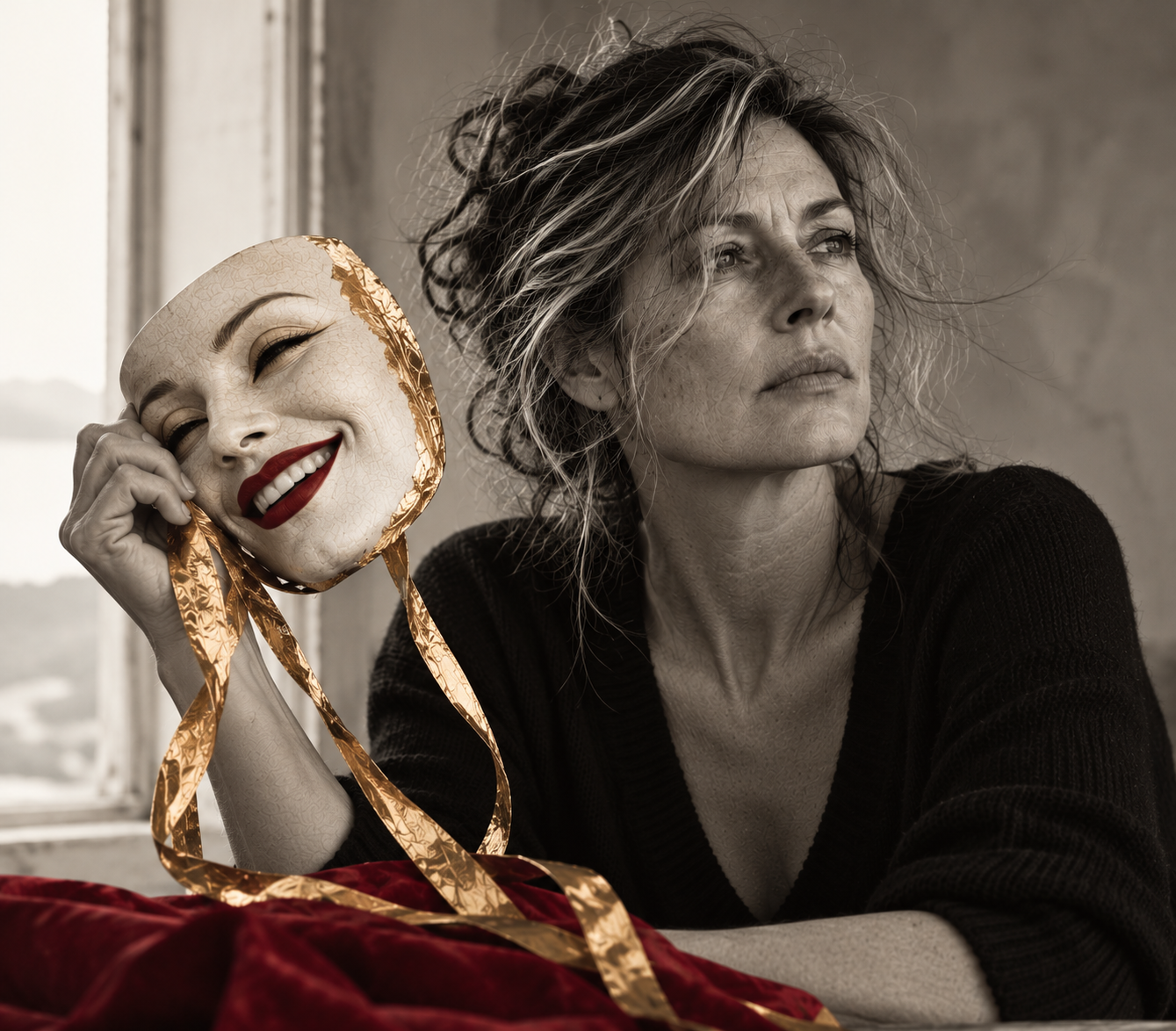
One morning, as I was making my tea, my eyes fell on a sentence printed on the teabag label: “You should develop mental strength.” There was nothing particularly surprising about it. Little words of wisdom designed to accompany our moments of relaxation have long been part of everyday life. Yet this seemingly well-intentioned invitation immediately irritated me. I had no desire to develop anything. I simply wanted to drink my tea.
What struck me afterwards was how almost imperceptible this injunction was. It demanded no particular effort, set no specific goal and promised no tangible result. It merely suggested that becoming a little stronger would be desirable, as though our inner strength were a permanent work in progress, something we should devote ourselves to even during our moments of rest. That small sentence seemed to reflect a view of existence in which every experience, every difficulty and sometimes even every quiet moment becomes an opportunity for self-improvement.
Of course, no one would seriously question the value of our psychological resources when life confronts us with adversity. We know how certain circumstances demand an ability to adapt that we never imagined we possessed. But there is a considerable difference between recognising this capacity and believing that we must continually develop it. It is within this distinction, it seems to me, that a certain ambiguity surrounding resilience has gradually taken hold.
I. When Getting Through an Ordeal Is No Longer Enough
In psychology, resilience refers to a process of adaptation in the face of significant adversity. It implies neither an absence of suffering nor any particular invulnerability. It also depends on factors that extend far beyond individual dispositions: the quality of our relationships, the support available to us, and the material and social conditions in which we live. Yet as the term has become increasingly familiar in everyday language, this collective dimension seems at times to have faded, giving way to a more individualistic, almost wilful understanding of our ability to overcome difficulties.
We have grown accustomed to stories in which hardship becomes an opportunity for personal transformation. A romantic breakup opens the door to a new beginning, burnout allows someone to rediscover their true vocation, and illness leads to a deeper understanding of what really matters. Such experiences do exist, and they can be profoundly meaningful to those who live through them. It is not their authenticity that deserves questioning, but the prominent place they occupy in our collective imagination. By continually telling stories of adversity through the lens of what they have enabled us to become, we risk making it harder to hear the experiences that lead to no particular revelation.
For suffering does not always teach us anything, or at least nothing we wished to learn. Some ordeals leave us exhausted, disoriented and sometimes permanently vulnerable. Others turn our lives upside down without offering any meaning we can readily discern. And we cannot assume that our need to find meaning in such experiences is necessarily shared by those who are living through them.
This question takes on particular significance when it comes to illness.
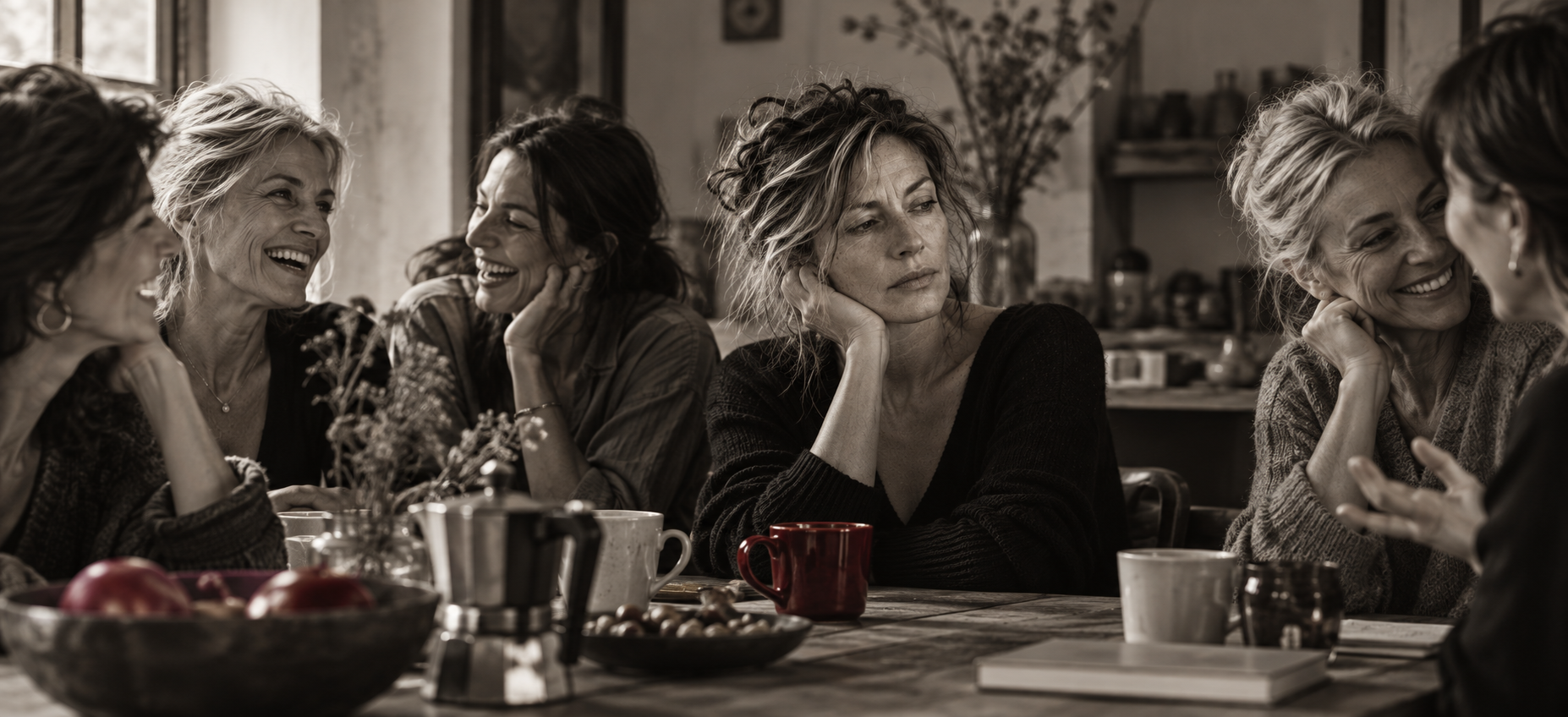
Such words can offer valuable support, but they can also have an unexpected effect when they do not reflect what the other person is actually experiencing.
II. Illness and the Stories We Are Expected to Tell
In 2001, in her essay Welcome to Cancerland, the American writer Barbara Ehrenreich described, with biting irony, the culture of positivity surrounding breast cancer in the United States at the time. Having received a diagnosis herself, she encountered a world of pink ribbons, comforting objects and personal accounts celebrating the courage of women living with cancer. What troubled her was not the existence of these forms of support, but their sheer prevalence and the difficulty they seemed to create for expressing feelings that did not conform to the prevailing optimism.
Twenty-five years later, the criticisms expressed by French journalist Hélène Vézier regarding Octobre Rose, France’s Breast Cancer Awareness Month, bear a striking resemblance to those raised by Ehrenreich. Despite changes in how we understand illness, certain representations persist. Women diagnosed with breast cancer are readily celebrated for their courage, fighting spirit or ability to transform their ordeal into a new way of approaching life. The image of the warrior may also give way to that of a gentle, smiling and grateful woman, whose vulnerability becomes acceptable because it remains reassuring to those around her.
It would be unfair to dismiss these representations as mere artifices. Some women find genuine strength in identifying as fighters, while others draw comfort from the symbols and communities associated with Breast Cancer Awareness Month. But their value depends precisely on the freedom to identify with them, or not. When these narratives become dominant, they risk overshadowing experiences that are less easily shared: exhaustion that does not turn into wisdom, fear that does not disappear in response to encouragement, or the simple desire to return to an ordinary life without having to celebrate some kind of personal transformation.
Barbara Ehrenreich also raised a question that extends well beyond the way we individually represent illness. By celebrating patients’ courage and psychological attitudes, do we risk diverting attention from the concrete conditions in which they experience their illness? In her critique of Breast Cancer Awareness Month, Hélène Vézier likewise reminds us that women living with cancer need far more than encouraging messages: they need resources, care and practical support that genuinely ease the burden of everyday life. The question of resilience then takes on a political dimension. Why do we continually ask individuals to develop their ability to endure adversity, rather than asking what we could do to make that adversity less difficult to live through?
III. What We Ask of Those Who Suffer
It would, however, be too simple to attribute these expectations solely to awareness campaigns or the personal development industry. We encounter them in our most intimate relationships too, often arising from deeply affectionate intentions. When someone we love is going through a difficult time, we instinctively try to encourage them. We remind them of their strength, their ability to persevere and the reasons they have to remain hopeful. Such words can offer valuable support, but they can also have an unexpected effect when they do not reflect what the other person is actually experiencing.
Perhaps our difficulty lies in the fact that another person’s suffering confronts us with our own helplessness. We wish we could repair what has been damaged, relieve what hurts and guarantee a favourable outcome. Yet some situations resist our desire to act. Illness reminds us not only that we cannot control everything, but also of a reality we generally prefer to keep at a distance: we are mortal. When the possibility of death enters the life of someone we love, it unsettles the illusion of security that ordinarily allows us to live without constantly contemplating our own finitude.
From this perspective, our attachment to stories of struggle and victory takes on another meaning. They do not merely celebrate the courage of people living with illness; they also offer us a way of warding off our own anxiety. If illness is an adversary that can be defeated through sheer determination, perhaps we can continue to believe that our willpower protects us from what frightens us most. But this representation becomes painful when someone does not recover. For if we have turned recovery into a victory, what place do we leave for those whose illness claims their lives, despite their courage and all the care they received?
Perhaps this is one of the limitations of our contemporary fascination with resilience. In trying to reassure someone, we may sometimes prevent them from sharing what truly worries them. In reminding them of their resources, we risk making them feel that they should already be capable of drawing upon them. This is not, of course, an argument for abandoning encouragement when someone is suffering, but rather for recognising that support does not always take the form of an invitation to overcome. Sometimes, it means simply remaining present in the face of a reality we cannot change.
IV. Learning to Befriend Life Rather Than Overcome It
Thinking back to my teabag, I realise that my irritation was ultimately less about mental strength itself than about the supposed necessity of developing it. There was something familiar in that should: the idea that a successful life is one in which we never stop progressing, adapting and making something of whatever happens to us.
Yet I have no wish to replace this ideal with an equally systematic celebration of fragility. Sometimes we need to feel strong, to push beyond our limits or to discover that we are capable of enduring what once seemed insurmountable. But we also need to be able to acknowledge our limitations without immediately seeing them as shortcomings to be corrected. Inner strength is not a moral obligation, any more than vulnerability is a virtue in itself.
It seems to me that learning to make peace with life might describe a different relationship with what happens to us. Not an attitude of resignation, but a way of living with existence without demanding that it constantly provide opportunities for us to become better people. Some experiences transform us, others test us without making us grow, and many simply escape the narratives we would like to construct around them.
Perhaps, then, we can allow ourselves to go through certain periods without immediately searching for what they might teach us. And accept that, on some mornings, making a cup of tea is a sufficiently complete experience in itself, one that calls for no additional advice.
Continue exploring.
Every birth chart tells a unique story about how we inhabit the world.
RÉSONANCES
À lire
Nom de l’auteur
Nom de l’ouvrage
À contempler
Nom de l’oeuvre ou du lieu
Nom de l’ouvrage
More paths for reflection.
- All Posts
- Astrology & Symbolic Perspectives
- Life Transitions & Passages
- Psyche & Inner Life
- Uncategorized

The reflection continues with you.


© 2026 Alkymissia — All rights reserved.